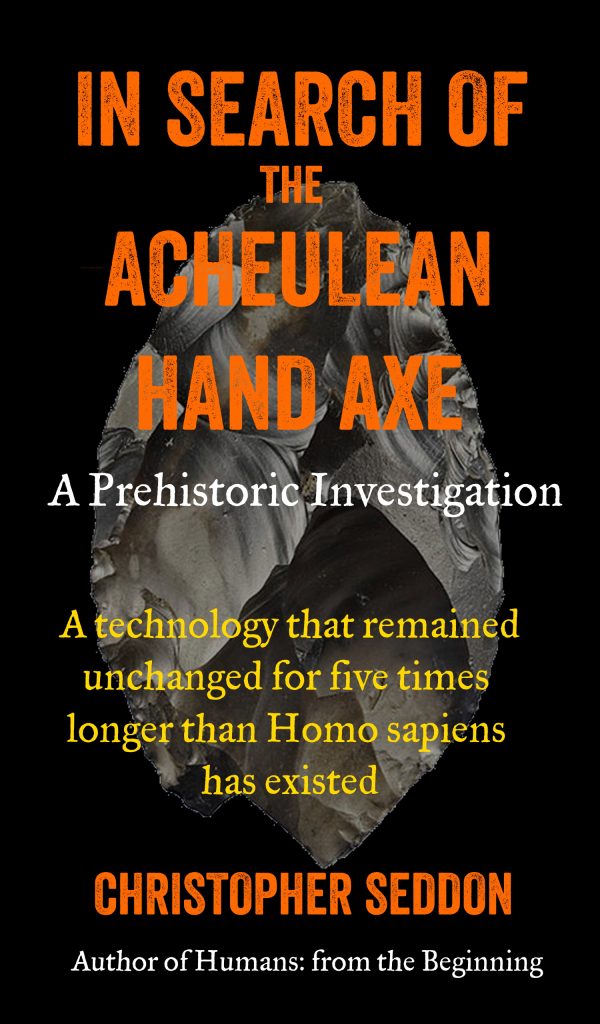
Imagine a multifunction tool that remained in use, more or less unchanged, not for decades, but one and a three-quarter million years. The earliest-known examples of the teardrop-shaped Acheulean stone hand axe are 1,760,000 years old and the most recent examples are around 55,000 years old. Ubiquitous in the archaeological record of Africa and western Eurasia, this most distinctive of prehistoric artefacts outlived the human species that invented it, Homo erectus, and it endured five times longer than Homo sapiens has existed. As a single object or achievement to represent humanity, the Acheulean hand axe stands alongside the Moon landing, the Pyramids, or the works of Shakespeare. It was not the first tool to be made and used by early hominins, but it was the first to be recognised as a prehistoric implement. It played a pivotal role in demonstrating that humanity had existed for far longer than nineteenth-century scholars had believed.
This is the third eBook Short Read in the In Search of series.
*** This and the other 11 short reads in this series are available in a single collection: Prehistoric Investigations 2: In Search of ***