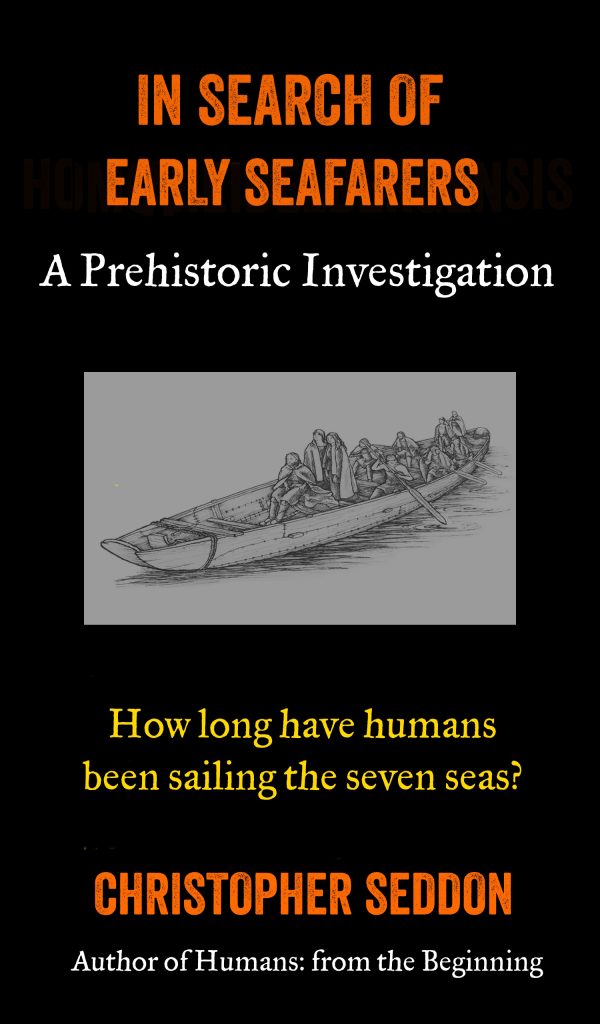
More than two-thirds of the Earth’s surface is covered with water. Away from the oceans, in non-desert regions of the world, the landscape is dotted by lakes and traversed by rivers and streams. Very early on, people must have realised that waterways could be used for transportation, or that fishing could be carried out more effectively inshore rather than onshore, or on a lake or river than from the lakeside or riverbank. In terms of human prehistory, the earliest direct evidence for watercraft is comparatively recent. This is unsurprising – the first iron-hulled ships did not appear until the early nineteenth century, and vessels constructed from wood and other organic materials are far less likely to be preserved. The oldest-known boat is the Pesse canoe, a Mesolithic-era dugout canoe that was discovered at Pesse in the Netherlands in the 1950s and has been dated to 8040 – 7510 BCE1. The Pesse canoe is predated by an Early Mesolithic petroglyph of a boat at Valle, on the Efjorden fjord, northern Norway, which is believed to date to around 9,140 – 8,840 BCE. The life-sized outline depiction is 4.05 m (13 ft 3 ½ inch) long, although one end has been eroded and either the bow or stern is missing. The boat resembles an Arctic skin boat or umiak of the type used by the Inuit2. Such craft consist of animal hides stretched over a wooden frame.
Despite this, we can say with reasonable certainty that humans have been building and sailing watercraft for far longer than 12,000 years. The first Australians are now believed to have reached the island continent at least 65,000 years ago, and they could only have arrived by sea. Even this date is quite late in the history of seafaring, which predates the emergence of modern humans.
This eBook Short read is the ninth work in the In Search of series and covers topics including the possible use of boats by Neanderthals, the first settlement of Australia, the Bronze Age boats discovered at North Ferriby, Yorkshire, Polynesian voyaging in the Pacific, and how Bronze Age travellers might have deduced that the Earth is not flat.
*** This and the other 11 short reads in this series are available in a single collection: Prehistoric Investigations 2: In Search of ***