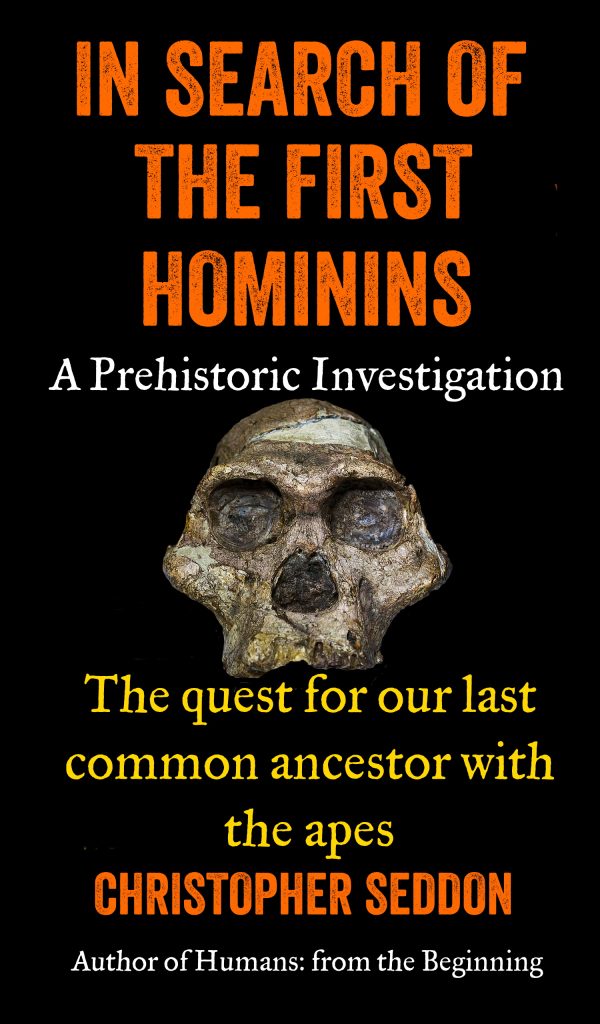
Ever since Darwin established our close relationship with living apes, anthropologists have sought fossil evidence for the so-called ‘missing link’, a transitional form between apes and humans. In modern terms, it is known as the Last Common Ancestor between us and our closest living relatives, the chimpanzees. The Last Common Ancestor is now believed to have lived 6.6 million years ago, and the earliest humans did not appear until 2.8 million years ago.
Before the first humans came the age of the australopithecines – apes that walked upright like humans, but with brains no larger than those of chimpanzees. The famous ‘Lucy’ is a near complete skeleton of an australopithecine, but her discovery came half a century after an equally epoch-making discovery. Whereas Lucy became a global sensation, the Taung Child was generally dismissed as the fossil of an ordinary ape. Only because of the persistence of anthropologists Raymond Dart and Robert Broom was it eventually accepted as a human ancestor.
The age of the australopithecines spans only the middle third of the period since the time of the Last Common Ancestor. What came before, and what do we know about the Last Common Ancestor itself? How and why did apes begin walking upright?
The first in the In Search of eBook Short Reads, this 14,000-word work tells the story of the quest for the Last Common Ancestor, beginning with Raymond Dart’s initially controversial Australopithecus africanus in the 1920s, continuing with the headline-making discovery of Lucy in the 1970s, and concluding with the discovery in the 1990s and early 2000s of upright apes that lived during the Late Miocene epoch, at a time when climate change threatened the forest habitat in which apes had lived for millions of years.
*** This and the other 11 short reads in this series are available in a single collection: Prehistoric Investigations 2: In Search of ***