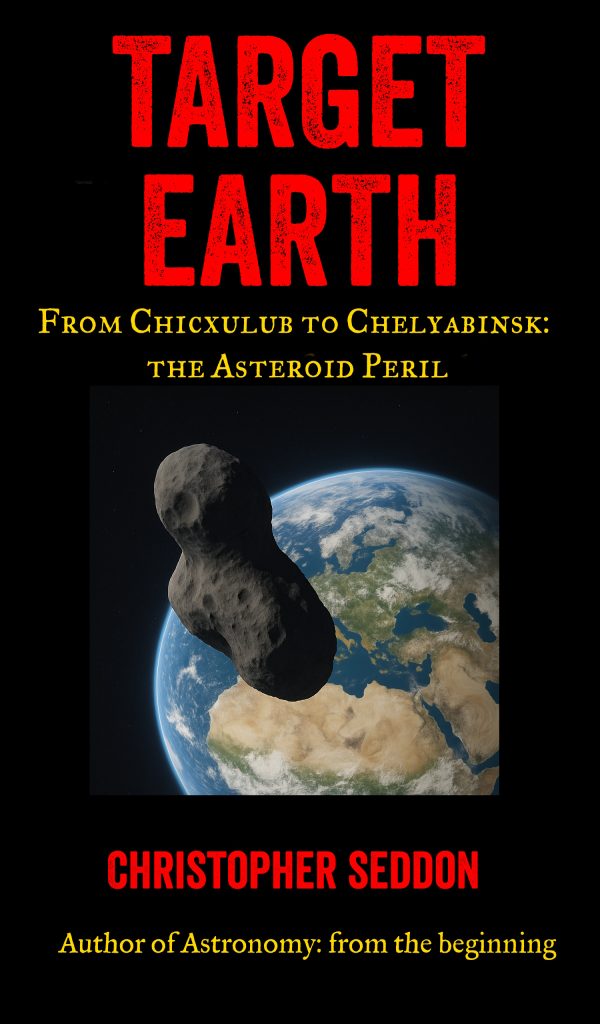
For billions of years, asteroids have silently crossed the Solar System—some harmlessly, others with catastrophic effect. Scientists now know that Earth is not immune to these cosmic encounters. From the dinosaur-ending Chicxulub impact to the mysterious Tunguska explosion of 1908 and the startling Chelyabinsk airburst of 2013, history has already given us dramatic warnings of what a single asteroid can do.
This concise and engaging 12,000 eBook short read explores the science, history, and future of hazardous asteroids, written for readers curious about both the threats and the solutions humanity is developing. In just a few chapters, you’ll discover:
The story of impacts that changed our planet, from dinosaurs to modern times.
How astronomers use powerful telescopes, radar, and space missions to detect and track near-Earth objects.
Why smaller impacts like Chelyabinsk are a wake-up call that even small asteroids pose real danger.
The growing field of planetary defense, including NASA’s DART mission, deflection strategies, and international cooperation.
What governments and scientists are doing today to reduce risk—and what challenges still remain.
Accessible to general readers yet grounded in current research, this book blends dramatic real-world stories with cutting-edge science. It is ideal for anyone interested in astronomy, space exploration, natural disasters, or simply understanding one of the greatest challenges facing humanity’s future.
You’ll come away with a clear picture of why hazardous asteroids matter, what’s being done to protect Earth, and why staying informed is the first line of defense.
Whether you’re fascinated by the dinosaurs’ fate, the mystery of Tunguska, or the question of how modern technology might one day stop a cosmic disaster, this short read will give you the essential knowledge in a fast, focused format.
Earth has been struck before. It will be struck again. The question is not if—but when. And when that day comes, what we know and what we prepare for could make all the difference.